Curaçao Cruise Port Guide: Best Excursions for a Port Day
Ships dock a short walk from Willemstad's old town, so you step off into a UNESCO-listed capital rather than an industrial terminal. In a four to six hour window you can walk the city and its bridge, add one beach, cave or turtle excursion, and still make all-aboard with room to spare.
Work with usable activity time after allowing for disembarkation, travel and your ship’s return deadline.
Quick Take: Start with a two-hour Willemstad walk; compare longer outings only after subtracting transfers, check-in and your ship’s return buffer. Explore Willemstad Guided Walk
Most Caribbean cruise ports drop you at a shopping pier and leave the real place a taxi ride away. Curaçao is the rare exception: the berths sit right beside Willemstad, so you walk off the ship and straight into one of the most photographed old towns in the region, colored houses, a swinging pontoon bridge, and all.
That changes how you plan a port day. You do not have to spend money to see the headline sights, which frees your budget and your hours for one well-chosen excursion. Below is how to spend a short window well, from the walk into town to the excursions worth booking and the timing that gets you back aboard.
What is there to do in Willemstad from a cruise ship?
Straight off the ship you can walk the colored waterfront, cross the floating Queen Emma pontoon bridge, browse the floating market and old town, and photograph the Handelskade facades, all free and all on foot. With a booked excursion you add a beach, the Hato Caves, a wild-turtle swim or a food walk, then return in time for the ship.
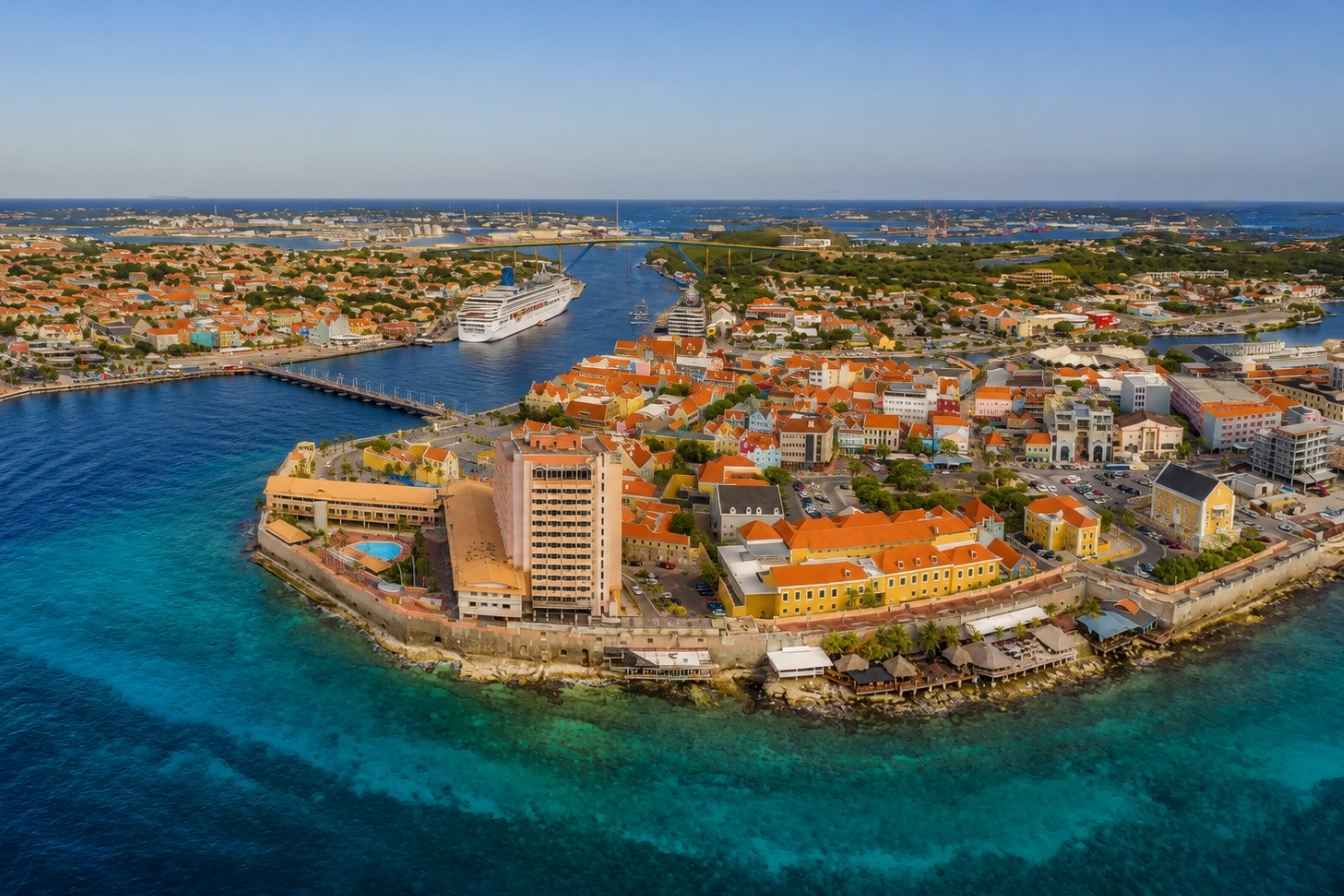
The free layer alone fills two or three hours. The historic districts of Punda and Otrobanda face each other across the harbor entrance, joined by the pontoon bridge, and the loop between them takes in the market, the forts, the shops and the best photo angles without a single entrance fee.
Then comes the choice of one paid experience. Because the city is handled on foot, your excursion budget goes toward the thing you cannot walk to: a beach with real snorkeling, the limestone caves near the airport, or a boat. Our overview of things to do in Curaçao helps rank what matters most to you before you book.
A useful way to frame it: the walkable city is your guaranteed win, and the excursion is your one big swing. Even if a booked trip runs long or the weather turns, you have already banked the bridge, the market and the waterfront for free. That safety net is why Curaçao stresses cruise passengers less than ports where the good stuff sits an expensive taxi ride inland.
Is Willemstad walkable from the cruise port?
Yes, very. From the main Mega Pier it is roughly a five to ten minute walk into Otrobanda and the Rif Fort area, and about ten to fifteen minutes to the Queen Emma pontoon bridge that carries you across to Punda. No taxi is needed to reach the old town, which is one reason Curaçao is rated among the most walkable cruise ports in the Caribbean.
The geography is simple once you picture it. The harbor entrance splits the city in two, Otrobanda on the pier side and Punda across the water, with the pontoon bridge stitching them together. Step off, follow the waterfront, and you are among the shops and cafes within minutes.
Comfort matters more than distance here. The walk is flat and paved, but the sun is strong and the historic pavements are uneven, so wear real shoes and carry water. When the pontoon bridge swings open for passing ships, free ferries shuttle pedestrians across, so a bridge opening never strands you. Cruise-focused resources such as the Curaçao Tourist Board map the same short route.
The one variable is which side of the harbor you want first. Step off on the Otrobanda side and you reach Rif Fort within minutes, then decide whether to cross the pontoon bridge to Punda's colored waterfront or save it for the return. Either way you are choosing between two halves of the same compact old town, not facing a long slog, and you can loop both comfortably within a couple of hours.
Where exactly do cruise ships dock in Curaçao?
Curaçao has two cruise berths, both beside Willemstad. The Mega Pier sits just west of the Otrobanda side and takes the largest ships. A smaller berth, Mathey Wharf, lies a touch closer to the old town. Either way you are minutes from the waterfront on foot, with taxis waiting at the pier for anyone heading further.
Knowing which berth you are on helps only a little, because both feed into the same short walk. The Mega Pier adds a couple of minutes versus the inner berth, nothing that changes your plan. What does matter is the taxi rank: it is your launch point for beaches and sights outside the city, and drivers work from a fixed-rate chart, so agree the fare before you climb in.
One practical note for the return: fix in your mind which pier your ship is on and what it looks like from the water, because on a busy day several ships crowd the same stretch. The table below sets out the two berths and their walking times.
Whichever berth you land on, orient yourself the moment you disembark. Note the terminal building, the direction of the old town, and the taxi rank, then take a photo of any landmark near your gangway. On a multi-ship day the waterfront fills with lookalike white hulls, and the few minutes you spend fixing your bearings on arrival save a stressful search when you return.
| Berth | Takes | Walk to old town |
|---|---|---|
| Mega Pier (Otrobanda side) | The largest ships | 5 to 10 min to Otrobanda, 10 to 15 to the bridge |
| Mathey Wharf (inner berth) | Smaller and mid-size ships | A few minutes to the Otrobanda waterfront |
| Taxi rank at the pier | Fixed-rate chart | For beaches and sights outside the city |
What can you realistically do in a 4 to 6 hour port window?
In four hours, walk the city and add one nearby beach or the food walk. In five to six hours, you can fit a fuller excursion such as the Hato Caves with flamingos, or a turtle swim, and still stroll the old town. Do not try to stack a beach and the caves and the city into one short day, something gets rushed.
The trick is to spend your first and last stretches in the walkable city, where you control the clock, and slot the excursion in the middle where the operator controls it. That way any small delay on the tour still leaves you a buffer to walk back rather than a panic to catch a taxi.
Match ambition to the window. A tight four-hour call rewards a single focus done well. A generous eight-hour call, which some itineraries offer, opens up the further sights on the north and west of the island. The table below maps realistic plans to the time you actually have.
Build in slack you will not notice until you need it. Tender operations, immigration lines, and the walk back to a distant berth all nibble at the window, so plan your excursion to end at least ninety minutes before all-aboard, not fifteen. Travelers who treat the printed time as a hard wall, rather than a target with a cushion, are the ones who end up jogging the last stretch of the pier.
| Time ashore | Realistic plan | Skip |
|---|---|---|
| About 4 hours | City walk plus one close beach or a food tour | Far west beaches, Klein Curaçao |
| 5 to 6 hours | Hato Caves and flamingos, or a turtle swim, plus the old town | Trying to do two excursions |
| 7 to 8 hours | A fuller island tour reaching Shete Boka or the west coast | Klein Curaçao unless the ship stays late |
What are the best shore excursions by type?
Pick by what the city cannot give you. For beach and snorkeling, head to Cas Abao or Grote Knip. For a signature Curaçao moment, swim with wild sea turtles near Westpunt. For something inland and shaded, tour the Hato Caves with the flamingo park. For culture and flavor, take a walking food tour. For adrenaline, book an off-road buggy or ATV run.
The strongest port-day picks share one trait: they package the transport, so you are not solving logistics on a clock. A combined trip such as a Hato Caves, flamingo park and beach excursion rolls three highlights into one pickup, which is ideal when every minute counts.
Prefer to stay near town and taste the island rather than tour it? A half-day Willemstad food tour keeps you close to the pier while diving into the markets and neighborhood kitchens most cruise visitors miss. Prices sit around the figures shown on each operator's live listing, which is also where you confirm the timing fits your ship.
Families and mixed-mobility groups have an easy default in the caves-and-flamingos combination, which trades sand and surf for shade, short walks and wildlife, and doubles as a rainy-day backup. Snorkelers and beach lovers should point their taxi or tour toward Cas Abao or Grote Knip, while anyone chasing a story to tell back on board tends to remember the wild-turtle swim above everything else.
| Excursion type | Where | Best for |
|---|---|---|
| Beach and snorkeling | Cas Abao, Grote Knip, Porto Marie | Sun, swimming, reef fish |
| Wild turtle swim | Playa Piskadó near Westpunt | A signature Curaçao moment |
| Caves and wildlife | Hato Caves and flamingo park | Shade, families, rainy-day backup |
| Culture and food | Willemstad markets and kitchens | Staying near the port, tasting local |
| Adventure | North-coast buggy, west-side ATV | Adrenaline, off-road scenery |
How do you get to the beaches, turtles and Hato Caves from the port?
The Hato Caves sit near the airport, about a 15 to 20 minute drive from the port. The wild-turtle beach and the best west-coast sand are 40 to 60 minutes out. A booked excursion with pickup is the cleanest way to reach any of them on a port day, with a fixed-fare taxi as the backup for a single nearby beach.
Distance is the whole story on a cruise day. Anything within twenty minutes is easy; anything past forty needs a plan that guarantees your return. That is why the turtle swim and far beaches are best done as organized trips, while a closer beach can work by taxi if you pin down the pickup time in advance.
The caves are a useful middle option. Being close to the airport, they are among the quicker inland sights to reach, and pairing them with the flamingo park makes a tidy half-day. See our Hato Caves visitor guide for hours and access, and the guide to where to see Curaçao's flamingos for the birds nearby.
If you would rather not book a full excursion, a fixed-fare taxi to a single nearby beach and back is the simplest independent plan, provided you lock the return pickup time and the driver's number before you get out. Sharing that taxi with another couple from your ship splits the fare and is common practice at the pier rank. Just resist the temptation to string several far-flung stops together on a taxi meter you cannot control.
| Sight | Drive from port | How to reach it |
|---|---|---|
| Hato Caves and flamingo park | About 15 to 20 min | Excursion with pickup, or taxi |
| Cas Abao beach | About 40 min | Excursion or fixed-fare taxi |
| Grote Knip beach | About 45 min | Excursion or taxi |
| Wild-turtle beach (Westpunt) | About 60 min | Guided excursion recommended |
| Shete Boka National Park | About 45 to 60 min | Full island tour |
Can you visit Klein Curaçao on a cruise day?
Usually not. Klein Curaçao is an uninhabited island reached by a boat trip that, with the crossing each way and beach time, runs close to a full nine or ten hour day. That overruns a normal port call. Unless your ship happens to be docked from early morning to late evening, save Klein Curaçao for a land-based stay.
The appeal is real, a pink lighthouse, a shipwreck, and some of the emptiest white sand in the region, but the timing rarely fits a cruise schedule. The catamaran crossing alone can take a couple of hours each way, and the ride is sometimes choppy, so the day does not compress neatly to fit a five-hour window.
If Klein Curaçao is a must, plan a separate island holiday around it rather than gambling a cruise day. Our honest take on whether Klein Curaçao is worth a day trip weighs the rough ride against the reward. On a port day, aim closer to shore and keep the buffer.
The same caution applies to any excursion that pushes to the island's far northwest, Shete Boka and Christoffel Park, on a short call. They are spectacular, but the drive alone eats an hour each way, leaving little margin. Reserve those for a longer port day of seven or eight hours, and on a standard stop keep your ambitions within about forty minutes of the ship.
How do you make sure you get back to the ship on time?
Work backward from all-aboard, which is typically 30 minutes before departure, and add a buffer on top. Book excursions that guarantee a timely return, keep the ship's local time, not your watch, and stay near the walkable city in your final hour. Ship-sponsored and reputable local tours both build schedules around sailing time.
Independent excursions are fine as long as they respect the clock, which the established operators do. The genuine risk is a self-planned far-flung outing with no margin, or losing track of the time difference between ship time and shore. Set a phone alarm for the moment you need to start heading back.
Your safest final hour is on foot in Willemstad, where you are minutes from the pier and immune to traffic. Do the far excursion in the middle of the day and the city at the ends. The checklist below keeps the return stress-free.
Ship time is the detail that trips people, not distance. Curaçao does not shift its clocks for your itinerary, so if the vessel is running on a different time zone than the island, set your phone to ship time the moment you plan the day and never trust a shore clock. When in doubt, head back early: an extra half hour browsing the pier shops beats watching your ship pull away.
| Return step | Do this |
|---|---|
| Note all-aboard time | Usually 30 min before departure, on ship time |
| Choose excursion timing | Book trips that promise a return with a buffer |
| Set a turnaround alarm | Phone alarm for when to start heading back |
| Spend the last hour walking the city | Minutes from the pier, no traffic risk |
| Identify your ship and berth | Several ships may share the waterfront |
What should you know before you step off the ship?
US dollars are accepted almost everywhere, so you rarely need local guilders. The old town is considered safe to walk in daylight with normal city sense. The sun is intense and rain showers are brief, so pack water, reef-safe sunscreen and a hat. Willemstad's colored buildings and forts are a protected UNESCO World Heritage Site, so treat them with care.
On money, keep small bills for taxis, market snacks and beach fees; cards work in shops and restaurants but not always at a street stall. On safety, the tourist core is relaxed and busy, and the usual advice applies, watch your belongings in crowds and stick to well-trafficked streets.
On weather and comfort, dress for heat and glare rather than for a stroll back home. If you want context for the architecture you are photographing, our Willemstad walking guide covers the Punda and Otrobanda highlights, and the guided Curaçao tours we list handle pickup for anyone heading beyond the city.
Two small habits smooth the whole day. Carry a printed or offline copy of your ship's all-aboard time and the operator's contact, since harbor Wi-Fi is patchy and your phone may not roam. And keep some cash in small denominations separate from your cards, so a beach fee, a market snack or a shared taxi never depends on finding a machine. Neither takes effort, and both remove the usual port-day friction.
| Port-day essential | What to know |
|---|---|
| Money | US dollars accepted; keep small bills, cards work in shops |
| Safety | Tourist core is safe by day; normal city awareness |
| Sun and rain | Intense sun, brief showers; water, sunscreen, hat |
| Shoes | Historic pavements are uneven; wear real footwear |
| Respect the heritage | The old town is UNESCO-protected; no littering |