Curaçao Liqueur and the Chobolobo Distillery Guide
The blue you see in a Blue Curaçao cocktail is added coloring, not the flavor. The liqueur itself pours out clear, scented with the dried peel of the laraha, a bitter orange that grows almost nowhere else. The genuine version is still bottled in Willemstad, at a 19th-century mansion called Landhuis Chobolobo.
The main choice is between hearing the production story and making cocktails yourself.
Quick Take: Choose the one-hour distillery tour for the production story, or the two-hour adult workshop to make cocktails. Explore Chobolobo Guided Tasting
What exactly is Curaçao liqueur, and why is it blue?
Curaçao liqueur is an orange-peel spirit that comes out of the still colorless. The famous electric-blue shade is food coloring added afterward, so the blue in your glass tastes exactly the same as the clear, orange or green versions. The flavor is all peel: bittersweet, citrusy, a little floral.
People are often surprised the first time they hear this. The color and the taste are two separate decisions. According to the drink's documented history on Wikipedia, the base liqueur is naturally clear, and producers tint it blue, orange, green or red depending on how they want it to look in a cocktail. Blue simply won the popularity contest, because a bright tropical drink sells itself on a beach bar menu.
What gives it flavor is the laraha, a bitter orange grown on Curaçao. The fruit itself is too sour and dry to eat, but the peel, once dried in the sun, turns fragrant. That aromatic peel is the whole point of the liqueur, and it is the reason the island can claim the drink as its own.
Taste it neat and the peel does the talking. There is a marmalade bitterness up front, a wash of sweetness, then a warm, almost candied-orange finish. Serve it very cold over ice, or lengthened with soda, and that bitterness reads as refreshing rather than sharp. Warm and neat in a stuffy room it can feel syrupy, which is why the island version is best treated as a long drink on a hot afternoon rather than a heavy after-dinner pour.
Where is the real Curaçao liqueur actually made?
The genuine article is made by Senior & Co. at Landhuis Chobolobo, a restored country house in the Salinja area of Willemstad. The family firm began selling the liqueur from a pharmacy in 1896 and moved production to the Chobolobo mansion in 1947, where the copper still has run ever since.
There are countless blue curaçaos on the world's back bars, made in dozens of countries, but only the Willemstad distillery uses the island's own laraha fruit. That is the distinction the company leans on, and it is a fair one. If you want to taste the drink where it comes from, this yellow-walled estate a short hop from the harbor is the address.
Landhuis Chobolobo is a landhuis, one of the old plantation-era country houses scattered across the island, and it has been restored rather than turned into a theme park. The yellow walls, shuttered windows and shaded courtyard are the real building, not a replica. The firm started small, selling the liqueur by the measure from a pharmacy, and only later grew into the estate that now anchors the brand. That slow history is a big part of why the place feels grounded instead of manufactured.
Chobolobo sits close enough to the old center that it slots neatly into a day of walking Willemstad. A small-group tasting route through the city's markets and neighborhoods, like this half-day Willemstad food tour, pairs well with a distillery stop, since both are about how the island actually eats and drinks rather than the cruise-strip version. You can read more about the company on the brand's own pages at the official Curaçao Liqueur site.
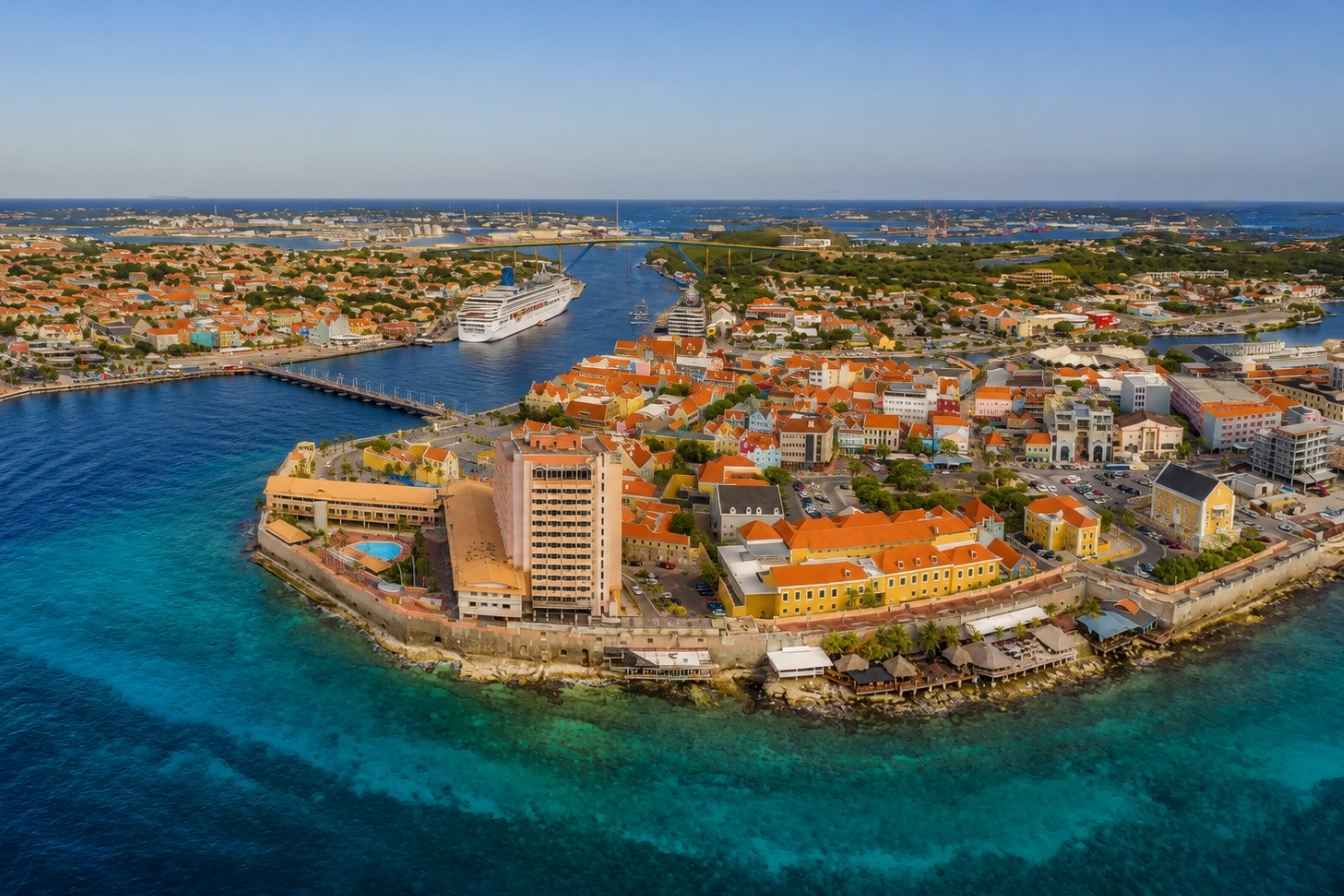
If you are building a day around the old town, the distillery pairs naturally with the pastel streets, the pontoon bridge and the markets. Our Willemstad walking guide maps a route that can finish at Chobolobo, and the wider things to do in Curaçao overview shows where a distillery stop fits among the beaches and parks.
How is blue Curaçao made from Laraha peels?
The peels are dried until brittle, soaked in alcohol and water for several days, then loaded into a heated copper still with a house blend of spices and run for about three days. The clear spirit that results is sweetened, brought to bottling strength, and tinted or left clear. Nothing about the color touches the taste.
It is a slow, low-tech process, and watching it happen is a big part of why the distillery is fun to visit. The copper pot still is small, the batches are modest, and on weekdays you can often see bottling in progress. Here is the sequence in plain terms.
| Step | What happens |
|---|---|
| Drying | Laraha peels are sun-dried until they turn hard and aromatic |
| Soaking | The dried peels steep in alcohol and water for several days |
| Distilling | Peels go into a heated copper still with a spice blend and run for roughly three days |
| Coloring | The clear spirit is bottled as is, or tinted blue, orange, green or red |
| Finishing | Sweetened and brought to strength, usually somewhere between 15% and 40% alcohol |
Copper matters here. The metal pulls unwanted compounds out of the spirit as it heats, which is why traditional distillers favor a copper pot still over stainless steel for delicate, aromatic liqueurs. The batches stay small on purpose, and the still is old enough that the process looks much as it did decades ago. There is no rush to the timeline either: several days of soaking, then roughly three days in the still, is a long cycle for a drink most people know only as a bright mixer.
The spice recipe is the family secret, guarded across generations, and the guides at Chobolobo are open about the parts they can share and cheerfully vague about the rest.
Why is the Laraha orange the whole secret?
The laraha descends from Seville oranges that Spanish settlers planted on Curaçao in the early 1500s. The dry, salty soil warped the fruit into something bitter and inedible, but the peel came out unusually fragrant. That accident of climate is the reason a Caribbean island ended up famous for an orange liqueur.
Spanish explorers introduced the ancestor orange to the island in 1527, and the trees adapted to conditions no farmer would have chosen. The flesh turned useless. The peel, though, developed the aromatic oils that make the liqueur taste the way it does. Locals eventually worked out that the discarded rinds were the valuable part, and a drink was born from what looked like a failed orchard.
Harvesting is its own small ritual. The fruit is picked, the peel is separated from the useless flesh, and the rinds are laid out to dry until the oils concentrate. Only a handful of trees are needed to flavor a lot of liqueur, because the aromatic punch is in the oils, not the volume of fruit. That is a neat trick for a plant that produces almost nothing edible: the failure of the orchard as food is exactly what makes it succeed as a flavor.
This is also why the island-made bottling tastes a little different from the mass-market blue syrups. Real laraha peel carries a bitterness underneath the sweetness. It is closer to marmalade than to candy, and that edge is what people mean when they say the genuine version tastes more grown-up.
What is the difference between Curaçao liqueur and triple sec?
Both are orange-peel liqueurs from the same broad family, so they are cousins, not opposites. Triple sec is usually clear and often stronger, around 40% alcohol for brands like Cointreau. Curaçao liqueur is frequently tinted, ranges wider in strength, and, in its genuine form, uses the island's own laraha peel.
In a lot of cocktail recipes you can swap one for the other and barely notice. A margarita made with orange curaçao instead of triple sec still tastes like a margarita. The practical differences come down to color, sweetness and origin rather than a wall between two separate drinks.
| Genuine Curaçao liqueur | Triple sec (general) | |
|---|---|---|
| Orange used | Laraha, grown on Curaçao | A mix of bitter and sweet orange peels, sourced anywhere |
| Color | Clear, or tinted blue, orange, green or red | Usually clear |
| Strength | Roughly 15% to 40% alcohol | Often around 40% for the well-known brands |
| Where it is from | Willemstad, Curaçao | Made in many countries |
So when a bartender reaches for blue curaçao in a Blue Lagoon, they are using the orange liqueur for both flavor and that pool-water color, where triple sec would give the flavor and leave the drink clear.
There is a wider orange-liqueur family to place it in. Cointreau is a triple sec, Grand Marnier blends orange liqueur with cognac, and blue Curaçao sits alongside them as the tinted, island-born cousin. In cooking, any of these can flavor a crepe, a glaze or a dessert, and the color of the Curaçao version rarely survives the heat, so a splash of the clear one does the same job in the kitchen without dyeing your food.
What is a visit to the Chobolobo distillery actually like?
You can walk the Chobolobo estate and its distillery for free on weekdays, wandering past the copper still and the bottling line at your own pace, then browse the shop and bar. If you want the story and a proper tasting, a guided tour runs about an hour and costs from around $20, with a tasting and a cocktail included.
The free self-guided option is genuinely worthwhile, which is rare for a distillery. You are not funneled through a paywall. For many visitors, an unhurried wander plus one drink at the courtyard bar is plenty. If you would rather have a guide walk you through the history and pour a proper flight, the paid tiers add tastings, extra cocktails and, on the deluxe tier, locally made ice cream. Prices below are current guidance from the distillery, so check the live details before you go.
| Option | Time | Cost (check live) | What you get |
|---|---|---|---|
| Self-guided wander | 30 to 60 min | Free | Walk the estate and distillery, watch weekday bottling, visit the shop and bar |
| Standard guided tour | About 60 min | Around $20 | Guided walk, a tasting, and one cocktail or soft drink |
| Deluxe guided tour | About 60 min | Around $30 | Tasting, two cocktails or soft drinks, plus local ice cream |
| Cocktail workshop | About 120 min | Around $50 | A welcome drink, then you mix two cocktails or mocktails of your choice |
Practical facts are simple. Chobolobo keeps weekday hours and closes on weekends, so plan around that, and the guides work in several languages. You can book ahead through the official Chobolobo tours page.
| Detail | Info |
|---|---|
| Where | Landhuis Chobolobo, Salinja, Willemstad |
| Hours | Monday to Friday, 8:00 to 17:00; closed weekends |
| Tour start times | 9, 10 and 11 in the morning, 1, 2 and 3 in the afternoon |
| Languages | Papiamentu, English, Spanish and Dutch |
| Getting there | Roughly a 10-minute drive or taxi from the Punda side of Willemstad |
What you actually see is modest and pleasant: rows of bottles catching the light, the copper still in its corner, hand-labeling at the bench, and a shaded courtyard where you can sit with a cold cocktail. Weekdays are livelier because production is running. On a hot morning, a self-guided loop followed by a Blue Lagoon in the courtyard makes a genuinely nice hour, and it costs almost nothing if you skip the guided tier.
How do the colors and flavors compare?
Blue, orange, green, red and clear are all the same orange-peel base with a different dye, so they taste identical. What varies is the look. Bartenders pick blue for a tropical splash, clear when the color would muddy a drink, and orange for citrus-forward cocktails. The distillery shop also carries flavored bottlings beyond the classic orange.
This trips up a lot of first-time buyers who assume blue is a distinct flavor. It is not. If you love the taste but hate the fake-blue look in a nice glass, buy the clear or the orange and you lose nothing but the color. The tint is theatre, and good theatre at that.
It also solves a common gift-shop dilemma. If you want the drink but not the neon look, the clear bottle is the sophisticated pick, and the orange sits comfortably in a home bar next to your other citrus liqueurs. Save the blue for the days you actually want a drink the color of the sea, which, on this island, is more often than you might expect.
| Color | Taste | Where it shines |
|---|---|---|
| Clear | Orange-peel liqueur, untinted | Drinks where blue would look wrong |
| Blue | Identical, dyed blue | Blue Lagoon, Blue Hawaiian, anything tropical |
| Orange | Identical, dyed orange | Margarita-style and citrus cocktails |
| Green / Red | Identical, dyed | Novelty and seasonal drinks |
Which cocktails is blue Curaçao known for?
Blue Curaçao is the color behind the drinks people picture when they imagine a tropical vacation: the Blue Lagoon, the Blue Hawaiian, and the blue margarita. In each, the liqueur does double duty, adding orange flavor and that unmistakable lagoon-blue shade in one pour.
Part of the fun is realizing how far the little island's export has traveled. That blue tiki drink in a bar thousands of miles away almost certainly owes its color to this liqueur, even if the bottle behind the counter was made nowhere near Curaçao. Tasting the genuine, laraha-based version where it started gives a familiar drink a backstory most people never learn.
You do not need a bar's worth of gear to make a decent one at home. A bottle from the island, a base spirit and something citrusy will get you most of the way. Here are the classics to know.
| Cocktail | Roughly what is in it | Notes |
|---|---|---|
| Blue Lagoon | Blue Curaçao, vodka, lemonade | The blue drink most people picture first |
| Blue Hawaiian | Blue Curaçao, rum, pineapple, coconut cream | The beach-bar classic |
| Blue Margarita | Blue Curaçao in place of triple sec, tequila, lime | A regular margarita, only bluer |
| Curaçao and tonic | A measure over ice, topped with tonic | The simplest way to actually taste the peel |
Not drinking? The distillery pours mocktail versions of its classics, and blue Curaçao syrup turns up in non-alcoholic sodas and mocktails that keep the color without the kick. At home, a simple way to enjoy a bottle is over crushed ice with soda and a squeeze of lime, which lets the orange peel come through instead of burying it under sugar. Treat it as a flavoring, use a light hand, and one bottle goes a long way.
Is a bottle worth buying, and how do you get the real thing home?
Yes, and it makes a genuinely local souvenir rather than a generic one. To get the island-made version, look for Senior & Co. and the words "Curaçao of Curaçao" on the label. Buy at the distillery for the widest range, or at a Willemstad supermarket for everyday prices, and pack it in checked luggage.
The airport shops after security sell it too, sometimes at a premium, which is fine if you would rather not carry a glass bottle around all week. Just remember the liquids rule: anything over 100 milliliters bought before security has to travel in your checked bag, so a supermarket or distillery bottle needs to go in the suitcase, not the carry-on.
| Where to buy | Notes |
|---|---|
| Chobolobo shop | Widest range and the genuine island bottling, straight from the source |
| Willemstad supermarkets | Everyday prices on the standard blue and orange |
| Airport (after security) | Convenient, sometimes pricier; a duty-free bottle can ride in your carry-on |
| What to look for | "Curaçao of Curaçao" and Senior & Co. on the label for the island-made version |
On price, a standard bottle is an affordable souvenir at supermarket rates, and the distillery shop carries gift sets and the less-common colors and flavors if you want something a little more special. A boxed bottle survives a suitcase well when it is wrapped in clothing in the middle of the bag. If you are flying home with a few, spread them across bags and keep the receipt, since customs allowances on alcohol vary by country.
A bottle travels as more than a drink, too. It is a small piece of the island's story, the odd orange that failed as fruit and triumphed as flavor, which makes it a better gift than a fridge magnet. Wrap it well, pass on the peel story, and the souvenir does double duty.
Is the Chobolobo distillery worth visiting?
For most travelers, yes, especially because the self-guided walk is free and quick. It is a genuine working distillery in a pretty historic house, not a manufactured attraction, and it slots into a Willemstad day without eating hours. Skip it only if you have no interest in the drink and a very tight schedule.
Set expectations right and you will enjoy it. This is a modest, low-key place, not a giant visitor center with rides. The charm is in the smallness: an old landhuis, a copper still, a courtyard bar, and staff who clearly like the product. Give it an hour, an hour and a half if you take a guided tour and linger over a cocktail.
Who should skip it? If nobody in your group drinks and you have half a day at most, the distillery is easy to trade for another beach. It is a drink-focused stop first and a history stop second. For everyone else, and especially anyone curious about how the island's most famous export is actually made, the free walk alone justifies the short detour off a Willemstad day.
It also fits the wider picture of what the island does best. The genuine liqueur, the food, and the pastel streets of Willemstad are all pieces of the same story, and the Curaçao Tourist Board groups them together for good reason. If you are lining up a first trip, our notes on the best time to visit Curaçao and the range of guided Curaçao tours we list will help you slot a distillery visit into everything else. For the food side of the island, the traditional Curaçao food guide covers the dishes that pair with a cold glass of the blue stuff.