Is Curaçao Safe for Travelers?
Curaçao is one of the safer places to travel in the Caribbean. The United States rates it Level 1, its lowest advisory, the island sits south of the hurricane belt, and the main real-world risk is petty theft rather than violence. A little common sense covers most of it.
Use current travel guidance for risks, and choose activities around your own comfort and needs.
Quick Take: A daytime Willemstad walk offers orientation and company; no tour removes normal travel or activity risks. Explore Willemstad Guided Walk
Is Curaçao safe for travelers right now?
Yes. Curaçao carries a Level 1 rating, "Exercise Normal Precautions," from the U.S. State Department, the lowest of its four advisory tiers. The island has a stable Dutch legal system, a well-developed tourism setup, and low rates of violent crime against visitors. The realistic risk you plan around is opportunistic theft, not danger to your person.
That framing matters because "safe" means different things in different places. On Curaçao it does not mean you dodge trouble at every corner. It means the day-to-day background risk is close to what you would feel in a mid-sized European or North American city, with the usual caveat that a rental car full of beach bags is a target if you leave it unlocked at a quiet trailhead.
The U.S. State Department travel advisory for Curaçao spells this out plainly: most incidents involving foreigners are crimes of opportunity, such as theft of unsecured property or break-ins to parked cars. Keep valuables out of sight, use the hotel safe, and you have handled the single most common problem before it starts.
| Risk | How likely | Simple defense |
|---|---|---|
| Car break-in at a beach or trailhead | The most common issue | Take valuables with you, leave nothing visible, lock the car |
| Petty theft or pickpocketing in crowds | Occasional, cruise-day peaks | Front pockets, zipped bag, phone away in crowds |
| Violent crime against tourists | Uncommon in visitor areas | Avoid isolated spots after dark, stick to lit streets |
| Scams or overcharging | Low | Agree taxi fares first, count change, use marked taxis |
Is it safe for Americans to go to Curaçao?
Yes, and Americans travel there in large numbers. Curaçao is a constituent country within the Kingdom of the Netherlands, English is widely spoken alongside Dutch, Papiamento, and Spanish, and U.S. dollars are accepted almost everywhere. There is no U.S. travel warning beyond the standard Level 1 baseline, and direct flights from Miami and New York keep the island firmly on the American vacation map.
Practical life is easy for U.S. visitors. Prices are commonly listed in both the local guilder and dollars, card payment is normal, and the power outlets and driving side match what most North American travelers expect. If you have visited Aruba or a Dutch-influenced Caribbean island before, Curaçao will feel familiar, and if you are weighing the two, our take on Curaçao versus Aruba covers the trade-offs.
Americans who like a soft landing on their first day often book a guided Curaçao tour with hotel pickup rather than renting a car straight off the plane. It removes the driving learning curve while you get your bearings, and you still see the marquee sights. A well-rounded Hato Caves, flamingos and beach highlights day is a low-stress way to cover ground on arrival.
Is Curaçao friendly to Americans?
Very. Curaçao's economy leans on tourism, and the welcome reflects it. Locals switch effortlessly between languages, most service staff speak clear English, and the island's mixed Dutch, African, Latin, and Caribbean heritage makes it used to visitors from everywhere. Friction with American travelers is rare, and hospitality is a point of pride here.
You will hear Papiamento, the local creole, as the everyday language, but a "bon bini" (welcome) and a smile carry you a long way. People are generally patient with questions about directions, buses, or where to eat. The island's small size helps too: cross it in under an hour, and guides, drivers, and shop owners often recognize repeat faces within a single trip.
Culture-first travelers get the warmest read on the island by eating where locals eat. A small-group Willemstad food tour through Punda and Otrobanda puts you in neighborhood kiosks and family kitchens, which is where friendliness stops being a slogan and turns into a plate of stew and a conversation.
What are the real crime risks, and where should you be careful?
The honest picture: petty, property-focused crime concentrated in a few spots, not widespread violence. Watch parked cars at remote beaches, keep an eye on bags in cruise-day crowds, and skip a handful of areas after dark. The historic tourist core, the resort strip, and the popular beaches are calm during daylight and lightly patrolled at night.
Areas to treat with the usual city caution include Campo Alegre and some industrial or back-street pockets of Otrobanda well away from the waterfront, especially late at night. None of these are places a typical itinerary sends you. If you are wandering after dinner, stay on the lit, busy streets of the historic center rather than cutting through empty side lanes.
| Area | Daytime | After dark |
|---|---|---|
| Punda and Handelskade waterfront | Very comfortable, busy, patrolled | Fine on the main lit streets, stay where people are |
| Otrobanda near the bridge | Comfortable, tourist-oriented | Keep to the waterfront and main roads, avoid empty back lanes |
| Resort strip (Jan Thiel, Piscadera, Mambo) | Very comfortable | Comfortable, well-lit |
| West-coast beaches and trailheads | Comfortable, watch your parked car | Not a nighttime destination, leave before dusk |
| Campo Alegre and industrial back streets | No reason to visit | Avoid |
Is it safe to walk around Willemstad?
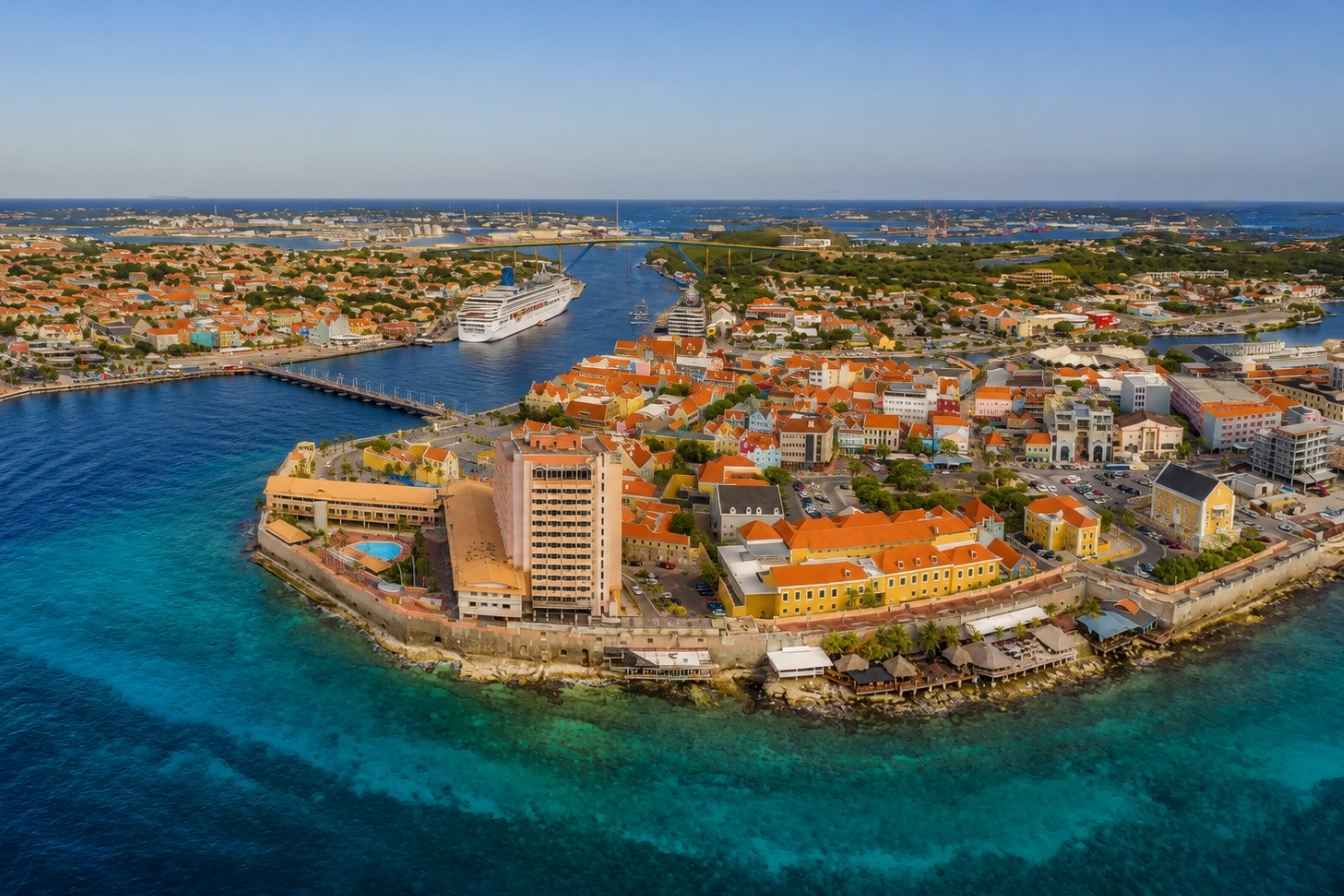
Yes, walking Willemstad by day is one of the safest and best things to do on the island. The UNESCO-listed historic center is compact, busy, and geared to visitors, with the pastel Handelskade, the floating Queen Emma Bridge, and the Punda and Otrobanda districts all walkable. At night, stick to the lit main streets and use normal precautions.
The old town is small enough to cross on foot in twenty minutes, and the Punda and Otrobanda halves are joined by the swinging pontoon bridge, a free and genuinely fun crossing. Cruise days bring the biggest crowds, which is when to zip your bag and keep your phone in a front pocket. Our Willemstad walking guide maps a route that keeps you on the safe, scenic streets.
The city earns its status partly on history: Willemstad is a genuine UNESCO World Heritage Site, protected for its Dutch colonial architecture. That designation is why the core is well maintained and heavily foot-trafficked, which in turn is why it feels secure. If you are timing a visit around a ship day, the Curaçao cruise port guide explains when the center is quietest.
How safe is the water: swimming, snorkeling, and boat trips?
The leeward (west and south) coast is calm, clear, and gentle, which is where nearly all swimming and snorkeling happens. The windward north coast is rough and not for casual swimming. The biggest water risks are sunburn, mild currents at a few beaches, and seasickness on longer boat crossings, all manageable with basic care.
Most popular beaches have calm, shallow entries that suit weak swimmers and kids. Sheltered coves like Playa Lagun and the managed beaches stay flat most days. Reefs sit close to shore, so the best snorkeling beaches reward you within a short swim, but that same easy access means boat traffic near entry points, so surface with a lifted arm and stay inside marked swim zones.
Boat trips are well run and professionally crewed, with life jackets and safety briefings standard. The one honest caveat is the open-water crossing to Klein Curaçao, which runs against the trade winds and can be bumpy. If you are prone to motion sickness, take a preventative before boarding the catamaran day cruise to Klein Curaçao, and follow the product instructions; it may not prevent symptoms.
| Water activity | Safety level | What to watch |
|---|---|---|
| Swimming, leeward beaches | Very safe, calm and shallow | Sun exposure, mild current at open bays |
| Snorkeling near shore | Very safe for most | Boat traffic, stay in marked zones, watch fins on coral |
| North-coast (windward) shore | Rough, not for swimming | Strong surf and blowholes, admire from land |
| Klein Curaçao boat crossing | Safe, professionally crewed | Seasickness on the outbound leg, take a preventative |
| Cliff jumping (e.g. Grote Knip) | Depends on you | Check depth and entry, only where locals do it |
Is Curaçao in the hurricane belt?
No. Curaçao sits far south in the Caribbean, close to the Venezuelan coast and below the main Atlantic hurricane track. Direct hurricane strikes here are exceptionally rare, the last major one on record was in the 1870s, and the island is routinely ranked among the safest Caribbean destinations to visit during hurricane season.
This is a real planning advantage. While islands further north brace through the June-to-November season, Curaçao, along with Aruba and Bonaire (the ABC islands), usually keeps its steady warm, dry, and breezy weather. You can travel in September or October here with far lower storm risk than most of the Caribbean carries. The occasional passing system brings a windy, rainy day, not a evacuation.
Weather is more about comfort than danger. The trade winds keep temperatures pleasant, the drier months run roughly January through September, and short showers cluster in the last quarter of the year. For a month-by-month read on rain, wind, and sea conditions, see our guide to the best time to visit Curaçao. Storm timing rarely dictates the trip, so plan around your schedule, not around the forecast.
| Time of year | Typical weather | Storm risk |
|---|---|---|
| January to March | Warm, breezy, peak season | Very low, well south of the belt |
| April to June | Warm and dry | Very low |
| July to September | Hot, driest, windiest | Low, far below the main storm track |
| October to December | Warmest sea, occasional showers | Low, a rare passing system brings rain, not evacuation |
A genuinely bad weather day here looks like a gray, windy afternoon with passing squalls, not a boarded-up emergency. The practical effect shows up on the water: a windier stretch means a rougher boat crossing and choppier snorkeling. If a Klein Curaçao trip or a catamaran day gets rescheduled, it is for comfort and sea state, not danger. Build one spare day into the plan and weather rarely costs you anything.
Is it safe to drive in Curaçao?
Yes, driving is safe and the island is easy to cross, but rural roads have quirks. You drive on the right, the same as the United States, distances are short, and main roads are good. The catches are roaming goats, unmarked potholes, few street signs in the countryside, and roundabouts that move quickly.
A rental car is the most flexible way to reach hidden beaches, and the whole island is well under an hour end to end. Just slow down for livestock and rough patches once you leave the main highways, download offline maps because signage thins out in the west, and fill the tank before long rural stretches. Parking at remote beaches is the moment to empty the car of anything worth stealing.
If driving on the left-hand map of an unfamiliar island does not appeal, the alternative is straightforward: skip the wheel and let a guide handle the roads. Weigh both in our rental car versus guided tour breakdown. Plenty of visitors mix the two, renting for lazy beach days and booking a tour for the harder-to-reach parks and caves.
| Driving factor | Reality | Tip |
|---|---|---|
| Side of the road | Right, like the US and mainland Europe | Easy adjustment for most visitors |
| Distances | Under an hour across the island | No long hauls, day-trip anywhere |
| Rural roads | Potholes, goats, iguanas, thin signage | Slow down, use offline maps |
| Night driving in the countryside | Dark, unlit, animals on the road | Return from remote beaches before dusk |
| Parked-car theft | The main crime risk on the island | Leave nothing visible, lock up |
Is the tap water safe, and what about sun, mosquitoes, and health?
Tap water is safe to drink. Curaçao produces its water by desalination, and it meets high standards, so you do not need bottled water for brushing teeth or refilling a bottle. The bigger day-to-day health factors are the strong sun, occasional mosquitoes, and staying hydrated in the heat. No special vaccines are required for most travelers.
The Caribbean sun is intense, especially reflected off water and white sand, so reef-safe SPF 50, a hat, and a rash guard do more for your trip than anything else. Mosquitoes can carry dengue in the region, so repellent is sensible for evenings and inland stops. For current, official guidance, the CDC Travelers' Health page lists routine vaccines plus hepatitis A and B as recommended, and confirms yellow fever is not required for direct travel from the U.S.
Medical care is good by regional standards, with a modern hospital in Willemstad and pharmacies across the island. Bring travel insurance, carry any prescriptions in their original packaging, and pack a small kit for sunburn and scrapes from coral or rocky beach entries. The reef-protection rules matter too: choose reef-safe sunscreen, a point the marine-research foundation CARMABI stresses for keeping the coral that draws snorkelers here alive.
| Health factor | Risk level | What to do |
|---|---|---|
| Sun and UV | High | Reef-safe SPF 50, hat, rash guard, shade at midday |
| Dehydration and heat | Moderate | Refillable water bottle, tap water is safe, take breaks |
| Mosquitoes (dengue in region) | Low to moderate | Repellent for evenings and inland stops |
| Coral cuts and sea urchins | Low | Water shoes, rinse and disinfect scrapes |
| Tap water | None | Desalinated and safe, no need for bottled |
Pharmacies are easy to find in and around Willemstad, and the island's main hospital is modern by regional standards, so minor issues are simple to sort out on the ground. Still, travel insurance that covers medical care and water activities is worth having, and carrying your own basic kit for sunburn and small cuts saves a drive when you are out at a remote beach.
Is Curaçao safe for solo and female travelers?
Yes. Curaçao is widely considered one of the more comfortable Caribbean islands for solo and solo female travelers. Violent crime against visitors is uncommon, English is everywhere, and organized tours provide easy company and an extra layer of safety. Standard precautions, the same you would take in any unfamiliar city, are enough.
Solo travelers are common on boat trips, snorkel outings, and city walks, so you will rarely feel out of place. Use marked taxis or ride apps after dark rather than walking long distances alone, keep to populated areas in the evening, and tell someone your plan for remote hikes or beaches. Small-group tours double as a social on-ramp if you want to meet other travelers.
| Traveler type | Safety read | Top tip |
|---|---|---|
| Solo female | Comfortable, common on the island | Marked taxis or ride apps at night, share your plan |
| Families with kids | Easy and welcoming | Calm leeward beaches, short drives, morning starts |
| Couples | Very easy | Standard care with valuables and parked cars |
| Older travelers | Easy, good medical care | Managed beaches, guided tours for the logistics |
| Groups of friends | Easy | Agree taxi fares first, keep the group together at night |
Across every one of those profiles the pattern holds: the background risk is low, the people are welcoming, and the few precautions that matter are the ones you would take anywhere. The most common regret travelers report is a bag left in a car, not a scary encounter, which tells you where to put your attention.
Families ask the same question from the other direction, and the answer is similarly reassuring: calm, shallow beaches and short drives make this an easy island with children. Our notes on Curaçao with kids cover which beaches and tours suit young swimmers. Whether you are traveling alone, as a couple, or as a family, the safety math on Curaçao lands in the same place: low background risk, high reward, a little common sense.